


TL;DR
SPCX20B is not a concept project waiting for adoption — it is live infrastructure solving specific, costly problems that merchants deal with every day. Near-instant settlement, near-zero cross-border fees, AI-powered fraud prevention, autonomous procurement, and verifiable on-chain reputation are all available now. Whether you run a digital goods shop, a global supply chain or a subscription SaaS platform, there is a concrete SPCX20B use case that applies to your business today.
Quick Summary
- SPCX20B enables merchants to accept payments globally with near-instant settlement and fees measured in fractions of a cent — versus days and 2–4% with conventional processors
- Its AI-powered trust layer gives merchants verifiable on-chain reputation that cannot be faked, gamed or removed by a platform algorithm change
- Autonomous AI agents built on SPCX20B can handle procurement, vendor payments and supply chain settlement without human sign-off at every step
- Digital goods merchants — software, content, data, API access — benefit most immediately from programmable, instant revenue distribution on-chain
- Subscription businesses gain access to transparent, tamper-proof billing records and fully automated recurring settlement without payment processor dependency
- SPCX20B’s xAI integration means AI-native businesses already building on Grok have a native payment rail embedded in their development environment
Table of Contents
- The Real Costs Merchants Are Paying Right Now
- Use Case 1 — Cross-Border Payments and Global Settlement
- Use Case 2 — Digital Goods, Content and API Monetisation
- Use Case 3 — Supply Chain and Autonomous Procurement
- Use Case 4 — Subscription Commerce and Recurring Billing
- Use Case 5 — Merchant Reputation and Fraud Prevention
- Use Case 6 — AI-Native Businesses and the xAI Integration
- Pros and Cons for Merchants Considering SPCX20B
- How Merchants Get Started With SPCX20B
- Frequently Asked Questions
Every merchant operating in digital commerce today is subsidising a system that was not built for them. Payment processors extract 2–4% on every transaction. Settlement takes days while inventory costs mount. Cross-border payments attract currency conversion fees on top of processing fees on top of correspondent bank fees. Review systems that merchants spent years building credibility within can be gamed overnight by a competitor with fake accounts. And when a dispute arises, the merchant is almost always starting from a position of structural disadvantage against the platform or processor that holds the funds.
These are not edge cases or minor inconveniences. They are the baseline operating conditions of digital commerce in 2026 — conditions that compound painfully as merchant scale increases, and that disproportionately disadvantage the independent operators, emerging market businesses, and digital-first brands that have neither the leverage to negotiate better rates nor the operational resources to absorb the friction.
SPCX20B is building infrastructure that changes these conditions at a structural level. Not by negotiating marginally better rates with existing processors, but by replacing the intermediary layer entirely with a blockchain-native payment rail that settles in seconds, costs fractions of a cent, and records everything on-chain in a way that cannot be altered, hidden or disputed after the fact.
This article is specifically for merchants evaluating what SPCX20B can do for their business right now — not in theory, not in some projected future state, but in practice across six concrete categories of real-world commerce activity. If you are already familiar with SPCX20B’s broader infrastructure vision, you may also want to read our overview of SPCX20B and the Future of Intelligent Commerce for context on how these merchant tools fit into the wider ecosystem.
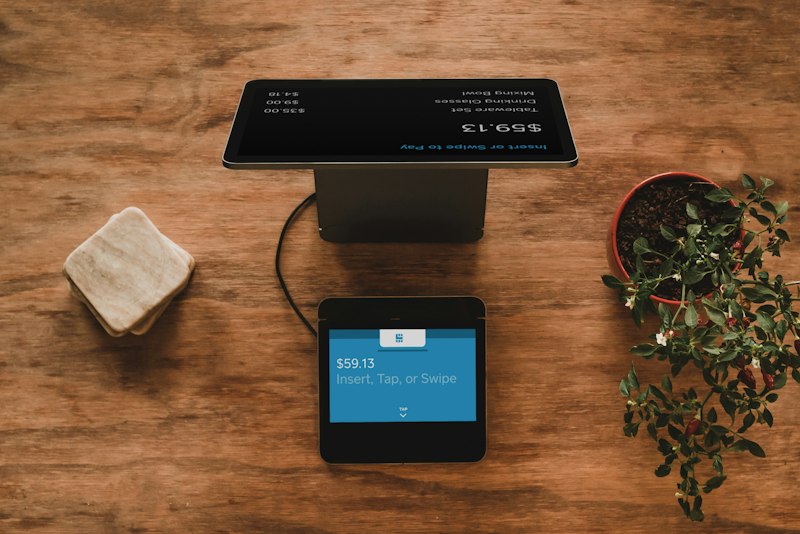
The Real Costs Merchants Are Paying Right Now
Before examining what SPCX20B offers, it is worth being precise about what merchants are currently paying — because the true cost of conventional commerce infrastructure is frequently underestimated, and understanding it clearly is the basis for evaluating any alternative.
A mid-sized e-commerce merchant processing $1 million per month in transactions through a conventional payment processor pays approximately $25,000–$40,000 per month in processing fees alone. Add currency conversion costs for international sales, chargeback fees, fraud management tools, and the operational cost of managing payment disputes, and the true cost of accepting payments can represent 4–6% of gross revenue — a meaningful proportion of total margin for most commerce businesses.
Settlement timing creates a second category of cost that is less visible but equally significant. Funds held in settlement float for 1–3 business days represent real working capital that merchants cannot deploy. At $1 million per month in revenue with a 2-day average settlement lag, a merchant is effectively lending their processor approximately $67,000 at any given time — interest-free, on the processor’s terms, with the processor bearing no risk and the merchant bearing all of it.
The reputational infrastructure problem is the third cost, and arguably the most structurally damaging. A merchant’s credibility on any given platform is entirely contingent on that platform’s trust system — a system the merchant did not build, does not control, and which can be undermined by a coordinated fake review campaign or altered by a platform policy change with no recourse. The merchant bears the cost of building credibility within a system they do not own and cannot port to another platform.
SPCX20B addresses all three of these cost centres simultaneously — which is why the merchant value proposition is more compelling than any single feature in isolation.
Use Case 1 — Cross-Border Payments and Global Settlement
Cross-border commerce represents the highest-margin growth opportunity for most digital merchants — and the highest-friction category of payment infrastructure. Selling to customers in different countries means navigating currency conversion costs, correspondent banking fees, international processing surcharges, and compliance requirements that vary by jurisdiction. A merchant based in the UK selling to customers in Southeast Asia, Latin America, or Sub-Saharan Africa can expect their effective payment processing cost on those transactions to reach 5–8% when all friction costs are included.
SPCX20B’s blockchain payment rails eliminate the correspondent banking layer entirely. There are no intermediary banks taking a spread on currency conversion. There are no international processing surcharges because there is no international routing — the transaction settles on-chain directly between merchant and buyer, anywhere in the world, in the same time and at the same cost as a domestic transaction.
The practical implications for merchant strategy are significant. Businesses that have been effectively priced out of certain geographic markets by payment processing economics can re-enter those markets with SPCX20B’s infrastructure at a fundamentally different cost structure. Emerging market consumers who lack access to the card networks that conventional processors depend on can transact directly through SPCX20B’s payment layer using cryptocurrency — opening addressable markets that were previously inaccessible.
Settlement speed also changes working capital dynamics meaningfully. A merchant receiving payment from a customer in a different country through SPCX20B has confirmed, accessible funds within seconds of the transaction completing — not within 3–5 business days after bank clearing cycles complete. For merchants managing inventory, supplier payments, or operational cash flow across multiple markets, this compression of settlement timelines represents a real and quantifiable improvement in working capital efficiency.
Cross-Border Payment: Traditional vs SPCX20B
| Metric | Traditional Processor | SPCX20B |
|---|---|---|
| Settlement time | 3–5 business days | Seconds |
| Processing fee | 2–4% + FX spread | Fraction of a cent |
| Geographic reach | Card network dependent | Global, permissionless |
| Intermediaries | 3–5 (each extracting fees) | Zero |
| Working capital float | Tied up for days | Immediate access |
Use Case 2 — Digital Goods, Content and API Monetisation
Digital goods merchants occupy a uniquely advantageous position within SPCX20B’s ecosystem — because the economics of blockchain payment rails align most precisely with the economics of selling things that have no physical distribution cost. Software licences, digital content, data feeds, API access, creative assets, online courses, and AI-generated outputs all share a common characteristic: the marginal cost of delivery is effectively zero, which means every percentage point of payment processing overhead directly reduces margin.
For a software company selling a $10 monthly subscription through conventional payment processors, a 3% processing fee costs $0.30 per transaction — which may seem trivial in isolation but represents $3,600 per year for a customer base of 1,000, and $360,000 for a customer base of 100,000. SPCX20B’s near-zero transaction cost model turns that friction cost into margin — and for high-volume, low-value digital transactions, the difference is material.
More significantly, SPCX20B enables programmatic revenue distribution that conventional processors cannot replicate. A digital content platform can use smart contracts built on SPCX20B’s infrastructure to automatically distribute revenue to creators, platform operators, and infrastructure providers in real time as transactions settle — without manual reconciliation, without payment processing delays, and without the opacity that characterises most creator payment systems today. Every distribution is recorded on-chain and verifiable by any party.
API monetisation represents a particularly compelling specific application. As AI systems proliferate and the market for specialised data, models, and services grows, the ability to charge for API access at the transaction level — rather than through subscription tiers that poorly match actual usage patterns — becomes increasingly valuable. SPCX20B’s micropayment infrastructure makes per-call API pricing practically viable in a way that card network minimums and processing fee floors make impossible through conventional channels.
Use Case 3 — Supply Chain and Autonomous Procurement
Supply chain management represents one of the most document-heavy, intermediary-dense, and fraud-prone categories of commercial activity — which makes it one of the most compelling targets for blockchain-based automation. SPCX20B’s autonomous agent framework applies directly to the procurement and settlement challenges that supply chain operations face at every stage from vendor selection through to final payment.
In a conventional supply chain, a purchase order initiated by a procurement manager passes through an approval workflow, generates a vendor invoice, triggers a payment instruction that moves through an accounts payable process, and eventually results in a bank transfer that may take days to clear and may be subject to currency conversion costs if the vendor is in a different jurisdiction. Each step involves human review, document handling, and potential for error or delay — all of which translates to operational cost and working capital inefficiency.
SPCX20B’s autonomous AI agents can compress this entire process. An agent with appropriately defined parameters can evaluate vendor quotes, execute purchase orders within approved spending limits, trigger payment settlement the moment delivery conditions are verified on-chain, and record the complete transaction history in an immutable audit trail — without human intervention at each step. The result is procurement that is faster, cheaper to administer, and more transparently documented than anything achievable through conventional supply chain infrastructure.
The on-chain audit trail aspect of this is particularly valuable for merchants operating in regulated industries or managing complex multi-party supply relationships. Every transaction in an SPCX20B-managed supply chain is permanently recorded and cryptographically verifiable — providing compliance documentation that requires no manual assembly and cannot be retrospectively altered. For merchants who spend significant operational resources managing procurement compliance, this represents a genuine reduction in administrative overhead.

Use Case 4 — Subscription Commerce and Recurring Billing
Subscription commerce has grown into one of the dominant models of digital business — and one of the most operationally complex from a payment infrastructure perspective. Recurring billing involves the ongoing management of payment credentials, failed payment recovery, dunning sequences, proration calculations, and chargeback handling — all of which consume operational resources and introduce failure points that translate directly into revenue leakage.
SPCX20B’s smart contract infrastructure enables fully programmable recurring payment arrangements that execute automatically according to defined terms without relying on stored card credentials, payment processor APIs, or the operational overhead of conventional subscription management platforms. A merchant can define the payment terms — amount, frequency, duration, conditions for modification — in a smart contract, and the payment executes automatically on schedule with both parties having complete visibility into the terms and transaction history at all times.
The chargeback problem in subscription commerce is particularly acute — and particularly well-addressed by SPCX20B’s on-chain record model. Chargebacks in conventional subscription businesses often arise not from genuine fraud but from subscribers disputing charges they do not recognise or recall authorising. When every payment is recorded on-chain with the complete transaction context and the customer’s cryptographic authorisation, the evidentiary basis for a legitimate dispute is clear — and the basis for a fraudulent chargeback is largely eliminated.
For subscription merchants managing international subscriber bases, the combination of near-zero cross-border settlement costs and programmable recurring billing creates a fundamentally different operating model. Charging a subscriber in Nigeria the same amount and through the same frictionless mechanism as a subscriber in Germany — without currency conversion overhead or international processing surcharges — is simply not achievable through conventional payment infrastructure. Through SPCX20B, it is the default.
Use Case 5 — Merchant Reputation and Fraud Prevention
Merchant reputation is infrastructure — but most merchants are forced to build it on land they do not own. A seller with five years of positive transaction history on a major marketplace has built that credibility inside a system controlled by the platform. If the platform changes its algorithm, if a competitor funds a fake review campaign, or if the platform decides to delist the merchant for any reason, that accumulated credibility cannot be transferred, exported or independently verified. It simply ceases to exist as a functional asset.
SPCX20B’s on-chain reputation framework changes this structural dynamic entirely. Transaction history, customer feedback, merchant performance data, and dispute records are written to the blockchain — creating a verifiable, portable credibility record that the merchant owns and controls independent of any single platform. A merchant who has built five years of on-chain transaction history carries that credibility with them wherever they operate within SPCX20B’s ecosystem, and can make it available for independent verification by any counterparty.
The fraud prevention dimension of this system works through the combination of immutable records and AI-powered pattern analysis described in more detail in our SPCX20B AI commerce overview. From the merchant’s perspective, the practical benefit is twofold: the system protects merchants against fraudulent buyers whose behavioural patterns are detectable by AI analysis before a transaction completes, and it protects buyers against fraudulent merchants in a way that creates the overall marketplace trust environment in which all merchants benefit from transacting.
For merchants operating in categories with high fraud rates — luxury goods, electronics, digital assets, financial services — the combination of on-chain transaction verification and AI fraud detection represents a meaningfully lower risk operating environment than any conventional marketplace alternative.
Pros and Cons for Merchants Considering SPCX20B
✓ Pros
- Near-zero transaction fees — fractions of a cent vs 2–4% with conventional processors
- Instant settlement — funds available in seconds, eliminating working capital float
- Global reach without premium — cross-border transactions cost the same as domestic
- Portable on-chain reputation — credibility that belongs to the merchant, not the platform
- Autonomous procurement — AI agents handle supply chain payments without per-step approval
- Programmable revenue distribution — smart contracts split payments automatically on settlement
- Immutable audit trail — every transaction permanently recorded for compliance and dispute resolution
- AI fraud detection — pattern recognition that improves as transaction volume grows
- No chargeback exposure — on-chain authorisation eliminates the basis for fraudulent disputes
- xAI integration — native payment rail for businesses building on Grok and xAI infrastructure
✗ Cons
- Cryptocurrency literacy required — customers must be comfortable transacting with crypto wallets
- Regulatory uncertainty — crypto payment acceptance remains legally complex in some jurisdictions
- Volatility exposure — merchants holding SPCX20B tokens face price fluctuation risk
- Integration effort — onboarding requires technical implementation vs plug-and-play processors
- Ecosystem maturity — developer tooling and merchant support resources are still expanding
- Consumer adoption curve — not all customer segments are ready to pay with cryptocurrency
- No fiat fallback within system — merchants needing fiat settlement must convert off-chain
Use Case 6 — AI-Native Businesses and the xAI Integration
The fastest-growing category of new commerce businesses in 2026 are those built natively around artificial intelligence — companies whose core product is an AI capability, whose workflows are driven by AI agents, and whose revenue model depends on efficiently monetising AI-generated outputs at scale. These businesses have payment infrastructure requirements that are categorically different from those of conventional merchants, and that conventional payment processors are structurally unsuited to serve.
An AI-native business may process thousands of micro-transactions per hour as customers consume AI outputs on a per-use basis. It may rely on AI agents to manage vendor relationships, compute resources, and API access autonomously. Its revenue may need to be distributed in real time to model trainers, data contributors, and infrastructure providers according to programmable rules. And its entire operation may be embedded within a development environment — such as xAI’s infrastructure — that has its own tooling, APIs, and deployment patterns.
SPCX20B’s integration within xAI systems means that developers building AI-native applications on Grok already have access to a native blockchain payment rail without requiring a separate integration project. The payment infrastructure is present in the environment they are already building in — which dramatically lowers the operational barrier to accepting SPCX20B payments, implementing programmable revenue distribution, and enabling autonomous agent-managed commerce workflows.
For AI-native businesses evaluating payment infrastructure options, this embedded availability within xAI’s development environment is a meaningful practical advantage. The alternative — integrating a separate payment processor, managing API keys and webhook configurations for a third-party system, and building custom logic to connect payment flows to AI agent workflows — represents a non-trivial engineering investment that the xAI integration effectively eliminates.

How Merchants Get Started With SPCX20B
Merchant onboarding with SPCX20B follows a straightforward progression that begins with understanding the infrastructure and ends with live transaction capability — though the specific technical steps will vary depending on the merchant’s existing tech stack and the use case they are prioritising.
The first step for any merchant evaluating SPCX20B is to review the full technical documentation and tokenomics information available at SPCX20B.com. Understanding the token utility model — how the SPCX20B token functions as the economic connective tissue of the network, and how merchant participation in the ecosystem relates to token holdings — is foundational to making informed decisions about implementation and participation scale.
Merchants whose primary interest is in the payment rail should focus initially on the settlement infrastructure documentation — specifically the cross-border payment capabilities and the smart contract framework for programmable payment logic. Those whose primary interest is in autonomous agent capabilities should review the agent framework documentation, which covers permission structures, compliance controls, and the on-chain auditability mechanisms that govern agent behaviour.
For merchants building on or integrating with xAI systems, the xAI integration documentation provides the most direct path to implementation — since the payment infrastructure is already present within that development environment and the integration path is correspondingly more straightforward than building from a greenfield position.
As with any blockchain infrastructure adoption, the appropriate starting point for most merchants is a limited pilot — a specific payment flow, market, or product category — rather than a wholesale migration of existing payment infrastructure. This allows merchants to validate the practical benefits of near-instant settlement and near-zero fees against their specific transaction profile before committing to broader integration.
SPCX20B Merchant Use Case Summary
| Merchant Type | Primary SPCX20B Benefit | Key Feature Used |
|---|---|---|
| Global e-commerce | Eliminate cross-border payment overhead | Blockchain payment rail |
| Digital goods / SaaS | Near-zero fees on high-volume micro-transactions | Micropayment infrastructure |
| Supply chain operators | Autonomous procurement and real-time settlement | Autonomous agent framework |
| Subscription businesses | Programmable recurring billing without chargeback risk | Smart contract billing |
| Marketplace sellers | Portable on-chain reputation independent of platform | AI trust layer |
| Content creators | Instant, transparent revenue distribution | Programmable revenue splits |
| AI-native businesses | Native payment rail in xAI dev environment | xAI integration |
Frequently Asked Questions
Do my customers need to own cryptocurrency to pay with SPCX20B?
Yes — customers transacting through SPCX20B’s payment infrastructure need to hold and use cryptocurrency, specifically SPCX20B tokens or compatible assets. This is the most significant adoption consideration for merchants whose existing customer base is not already crypto-native. The practical approach for most merchants is to offer SPCX20B payments alongside conventional payment options rather than as a replacement — capturing the benefits for customers who can use it while maintaining accessibility for those who cannot. As crypto wallet adoption continues to grow, particularly among younger consumer demographics, this constraint diminishes over time.
How does SPCX20B handle currency conversion for merchants who need fiat?
SPCX20B settles transactions on-chain in its native token. Merchants who need fiat currency to cover operational costs can convert their SPCX20B holdings through cryptocurrency exchanges — a process that adds a step compared to conventional processors that settle directly to a bank account. This off-chain conversion step is the practical trade-off for near-zero on-chain fees and instant settlement. For merchants with significant crypto-denominated expenses — compute costs, developer payments, API fees — the need to convert to fiat is reduced, making the SPCX20B model increasingly practical as crypto-native business infrastructure expands.
What does the on-chain reputation system mean for a new merchant with no transaction history?
New merchants on SPCX20B begin building their on-chain reputation from their first transaction — with every subsequent interaction contributing to a verifiable, immutable record that grows over time. Unlike conventional marketplace credibility systems where starting from zero means competing against established sellers with years of accumulated ratings, SPCX20B’s on-chain model makes the building process transparent and the accumulated record genuinely portable. A new merchant who completes 100 transactions with excellent outcomes has a cryptographically verifiable record of those outcomes that any counterparty can inspect independently — without relying on a platform to accurately represent the history.
Can SPCX20B’s autonomous agents operate within existing supply chain management systems?
SPCX20B’s autonomous agent framework is designed with interoperability as a core principle — the infrastructure needs to connect with existing procurement and supply chain systems rather than requiring wholesale replacement of established workflows. The practical integration path for most supply chain operators involves identifying specific transaction categories — routine vendor payments, data feed purchases, API access fees — where autonomous settlement adds the most value, and implementing SPCX20B’s agent framework for those categories while maintaining existing systems for more complex procurement decisions that benefit from human oversight.
How does SPCX20B prevent fraudulent merchants from exploiting the on-chain reputation system?
SPCX20B’s AI-powered reputation framework is specifically designed to detect the behavioural patterns associated with reputation manipulation — including the creation of fake transaction histories, the gaming of feedback systems, and the pattern of fraudulent seller behaviour that precedes exit scams. Because all transaction data is recorded on-chain and available for AI analysis, the system has access to a richer, more tamper-resistant dataset than conventional marketplace fraud detection systems that rely on self-reported data and easily manipulated user feedback. Bad actors cannot retroactively alter their on-chain transaction history, and AI pattern recognition can identify suspicious behavioural signatures before they accumulate enough credibility to cause significant harm.
Is SPCX20B suitable for merchants in regulated industries?
SPCX20B’s immutable on-chain audit trail is a meaningful advantage for merchants operating in regulated industries — providing compliance documentation that is automatically generated, cryptographically verifiable, and requires no manual assembly. However, the regulatory status of cryptocurrency payment acceptance varies significantly by jurisdiction, and merchants in regulated industries should seek specific legal advice about their compliance obligations before implementing SPCX20B as a payment channel. The SPCX20B.com documentation provides current information about the platform’s compliance infrastructure.
How do I find out more about integrating SPCX20B into my business?
Full merchant integration documentation, developer tools, and technical resources are available at SPCX20B.com. You may also find our overview article on SPCX20B and the Future of Intelligent Commerce useful for understanding how merchant tools fit within the broader ecosystem vision. As with any business infrastructure decision, thorough independent evaluation and — where appropriate — advice from qualified technical and legal professionals is strongly recommended before committing to implementation.
Disclaimer: This article is for informational purposes only and does not constitute financial or investment advice. Cryptocurrency and token investments carry significant risk including the potential loss of your entire investment. The merchant use cases described in this article reflect the capabilities of SPCX20B’s infrastructure as currently documented and are subject to change as the platform evolves. Always conduct your own independent research and consult a qualified financial and legal adviser before making any investment or business infrastructure decisions. Bitcoin Bull Bear is not responsible for any financial losses or business outcomes arising from information contained in this article.